Ten years on, the Design Museum is still a story we tell
Some projects end when the work goes out. Others keep producing stories for years after. Our launch work for the Design Museum is one of the second kind, and its tenth birthday gave us a good reason to tell a few of them again.
Some projects end when the work goes out. Others keep producing stories for years after. Our launch work for the Design Museum is one of the second kind, and its tenth birthday in Kensington gave us a good reason to tell a few of them again.
The museum first opened in London in Shad Thames in 1989, but it then closed for two years before moving to its new home on Kensington High Street, where its been since opening in November 2016. We were lucky enough to help launch that move, working with Josephine Chanter and the museum team.
To win the business we had to pitch to the board, and Sir John Hegarty and Sir Terence Conran were sitting on it. Presenting creative work about design to the man who founded the museum with his own money and did so much to shape how the world thinks about design: let’s just say it’s a good way to find out how much you believe in your idea.
That idea came from what makes the design museum different from any other. Its subject isn’t kept behind glass. It’s the chair you’re sitting on; the typeface on the road sign outside; the phone in your hand; the LLM interface you’re typing into. Everything around you has been designed and its with you 24/7.
Which means the Design Museum never really closed.
Kensington just gave it a new front door, and what a spectacular front door it was.
The original building, designed by RMJM, was built in 1962 for the Commonwealth Institute, and its copper-clad roof was the first major British use of the hyperbolic paraboloid form. OMA and John Pawson reimagined the building around that roof, so the museum’s new home is itself an iconic piece of post-war modernist design.
So the line became: the museum that never closes is now open.
The film put the idea on screen. Every object in it opens or closes, and every one of them comes from the museum’s own permanent collection. The everyday world that the museum collects became the cast.
One of those objects was Peter Saville’s original 12" sleeve for New Order’s Blue Monday, which is in the collection. We wanted the track as well, so we wrote to the band and asked. They sent back a lovely note saying yes. Holding that sleeve on set, knowing it was both the soundtrack and the exhibit, is about as close as an ad person gets to a sacred object.
We were also among the first productions anywhere to use a drone camera, which we used to get the aerial shot of the museum’s roof at sunset. Partway through the shoot the local police borrowed the drone and flew it across Holland Park after an escaped criminal. It’s true, and it’s the one I’m asked about most.
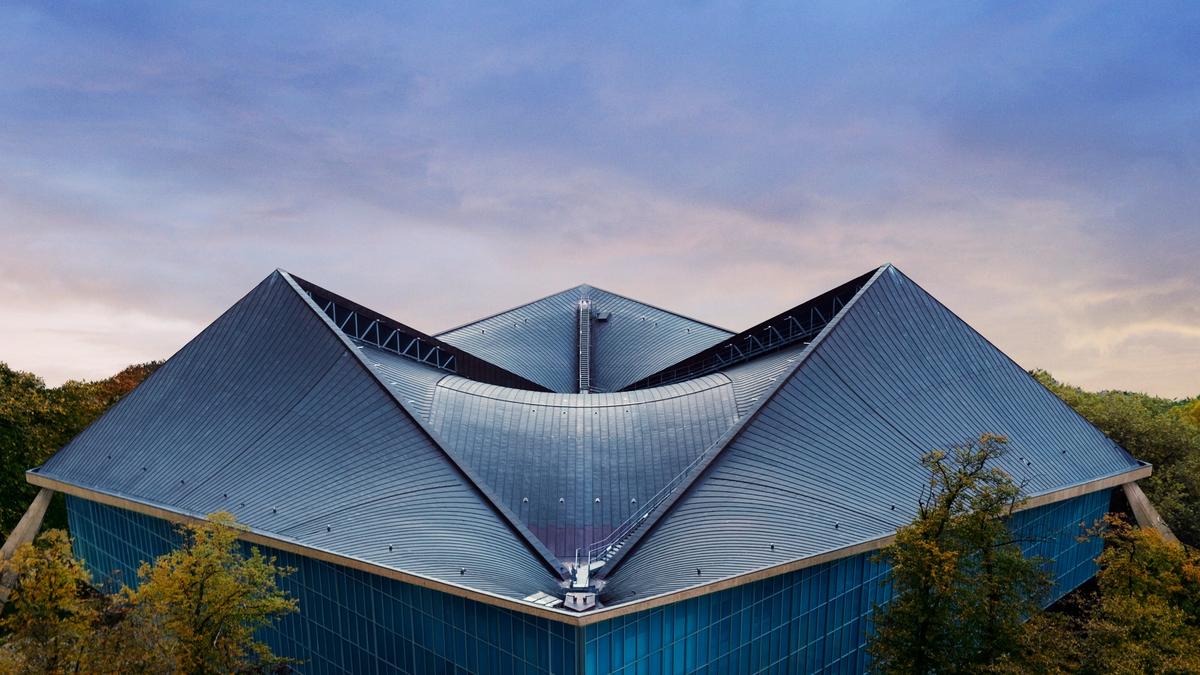
That shot became the campaign poster. The work went on to win a D&AD pencil, and that still means a lot. What has lasted even longer is the image itself. Ten years on, it still greets visitors on the museum’s homepage, and it’s the picture most people have in their heads when they think of the Design Museum.
The stories have lasted too, which is why this year’s celebrations suited me so well. The Design Museum marked its 10th anniversary with a full weekend of talks, workshops and tours on 21 and 22 November. As part of it, ‘Meet the Museum’ gave visitors a chance to chat with designers, artists and creative voices. I was one of a group of people from the museum’s last decade who became a talking library for the afternoon, where visitors could come up and hear how the place was made.
Ten years ago we said the museum never closes. It was good to go back and find it more open than ever. Here’s to the next decade of the Design Museum continuing to lead how we define and interpret the worlds we build around us.
By Mark Eaves, Co-Founder